
What Does a Full STI Panel Actually Test For?
Your partner says they had a “full panel.” Here’s why that phrase might not tell you as much as you think.


STI testing is a sensitive topic, and it can be challenging to initiate a conversation about it. However, once you’ve brought it up, it’s not uncommon to hear something like, “I got a full panel, and I’m clean!”
A “full panel” may sound reassuring, but what does it actually include? And what does “clean” imply? We’ll explore why the words we choose when talking about sexual health matter in an upcoming article. You can sign up for our newsletter to hear when it publishes.
There’s no standard definition of a full STI panel, so you and your partner might mean different things by it.
What does a full STI panel include?
An STI panel is simply a group of tests offered together. Different providers package them differently.
For a concrete example, compare four panels available through Velvet Verify’s testing partners. Two use at-home sample collection, while the other two involve a visit to a lab. All four are marketed as broad STI screening, but look at how much their contents differ.
Four panels. Four different definitions of “full.”
What’s included?
| Test / sample site | Uber Box 8-Panel (AT-HOME COLLECTION) | Total Box 14-Panel (AT-HOME COLLECTION) | Comprehensive 10-Test (IN-PERSON LAB) | Ultimate 13-Test (IN-PERSON LAB) |
|---|---|---|---|---|
| HIV (types 1 & 2) | ✓ | ✓ | ✓ | ✓ |
| Syphilis | ✓ | ✓ | ✓ | ✓ |
| Hepatitis A | ✓ | ✓ | ||
| Hepatitis B | ✓ | ✓ | ||
| Hepatitis C | ✓ | ✓ | ✓ | ✓ |
| Herpes (HSV-1) | ✓ | ✓ | ||
| Herpes (HSV-2) | ✓ | ✓ | ✓ | ✓ |
| Trichomoniasis | ✓ | ✓ | ✓ | |
| Mycoplasma genitalium (Mgen) | ✓ | ✓ | ||
| Chlamydia · genital | ✓ | ✓ | ✓ | ✓ |
| Chlamydia · throat | ✓ | |||
| Chlamydia · rectal | ✓ | |||
| Gonorrhea · genital | ✓ | ✓ | ✓ | ✓ |
| Gonorrhea · throat | ✓ | |||
| Gonorrhea · rectal | ✓ | |||
| HPV | Optional* | |||
| Advertised price | $209 | $379–$409 | $139 | $259 |
| Explore options | View panel (opens in a new tab) | View panel (opens in a new tab) | View panel (opens in a new tab) | View panel (opens in a new tab) |
How to read this: ✓ included · blank cells: not included · *HPV is an optional Total Box add-on for women 30+. Prices shown are published list prices checked October 31, 2026 and can change. A checkmark does not indicate that all packages use identical sample methods or have the same detection windows. Panel names are vendor-defined, not medical standards.
Affiliate disclosure: Velvet Verify may earn a commission if you purchase through the links above.
So which one is actually a full panel?
They all cover several common infections, but not the same ones or the same anatomical sites. The myLAB Box Total Box includes throat and rectal chlamydia and gonorrhea samples, while the HealthLabs panels include hepatitis A and B testing. The panel with the most tests isn’t necessarily the one you need.
These packages make it convenient to order several tests together. But choosing a package isn’t the same as working out which tests you need. That depends on your sex, the types of sexual activities you engage in, your medical history, any symptoms, and other circumstances your healthcare provider can help you consider.
Why the same STI test doesn’t always tell the same story
Take chlamydia and gonorrhea, for example.
Both infections can affect the genitals, throat, or rectum. But a negative urine test doesn’t tell you whether an infection is present in someone’s throat.
Your partner might say, “Everything came back negative,” and genuinely believe they were tested for everything. But their testing may not have included samples from their throat or rectum.
This is particularly relevant when oral or anal sex is involved. The CDC advises people who’ve had oral or anal sex (opens in a new tab) to discuss throat and rectal testing options with a healthcare provider. As the comparison above shows, those sites aren’t included in every package.
And then there’s timing.
STI tests have different window periods, meaning the time after an infection occurs before a test can reliably detect it. Even tests for the same infection can differ. For HIV, the CDC estimates (opens in a new tab) a window of 18 to 45 days for a laboratory antigen/antibody test using blood from a vein, compared with 10 to 33 days for a nucleic acid test (NAT). Timing and test type are part of what gives a result its meaning.
None of this means you should insist that every partner undergo every available test. What makes sense for one person may not make sense for another. That’s something each person should work through with their healthcare provider.

Why more testing isn’t always better
Herpes simplex virus (HSV) provides another interesting example.
Many commercial STI panels include HSV blood tests. But the U.S. Preventive Services Task Force (opens in a new tab) recommends against routine blood screening for genital herpes in people without symptoms. A significant reason is the relatively high potential for false-positive results in that setting, along with limitations in what those tests can tell us.
HSV testing still matters when there’s a medical reason for it. But if your partner hasn’t had a routine HSV blood test, that doesn’t necessarily mean they’ve been careless about their sexual health.
This is something we’ve thought carefully about at Velvet Verify. We don’t display negative HSV results when partners exchange information because we don’t want people feeling pressured to seek testing that may not be medically recommended simply because someone else has a negative result to show.
Positive HSV results, however, are shared. They may be relevant information for a potential partner to consider, including whether to discuss follow-up testing with a healthcare professional.
We take a similarly considered approach to other infections, such as Mycoplasma genitalium (Mgen), for which the CDC does not recommend routine screening (opens in a new tab) in people without symptoms. Our goal isn’t to treat every infection identically. It’s to make the information people exchange useful and understandable while respecting clinical guidance.
What should you ask a partner about STI testing?
You don’t have to know the ins and outs of every STI test to have a productive conversation. And you shouldn’t need to turn a promising date into a medical interrogation.
If someone says they’ve had a full panel, you might simply respond:
“That’s great! Do you know which tests were included and when you had them? I’m happy to share mine, too.”
Or, even easier: “Are you Velvet Verified?”
Velvet Verify makes it easy for two people to privately exchange relevant results, see which supported tests are being shared and how recently the samples were collected, without deciphering someone’s medical records or guessing what a testing package included.
Results, not a medical-record download.
See the relevant test information your partner chooses to share, with a time-limited connection. No need to guess what was included in a testing package.
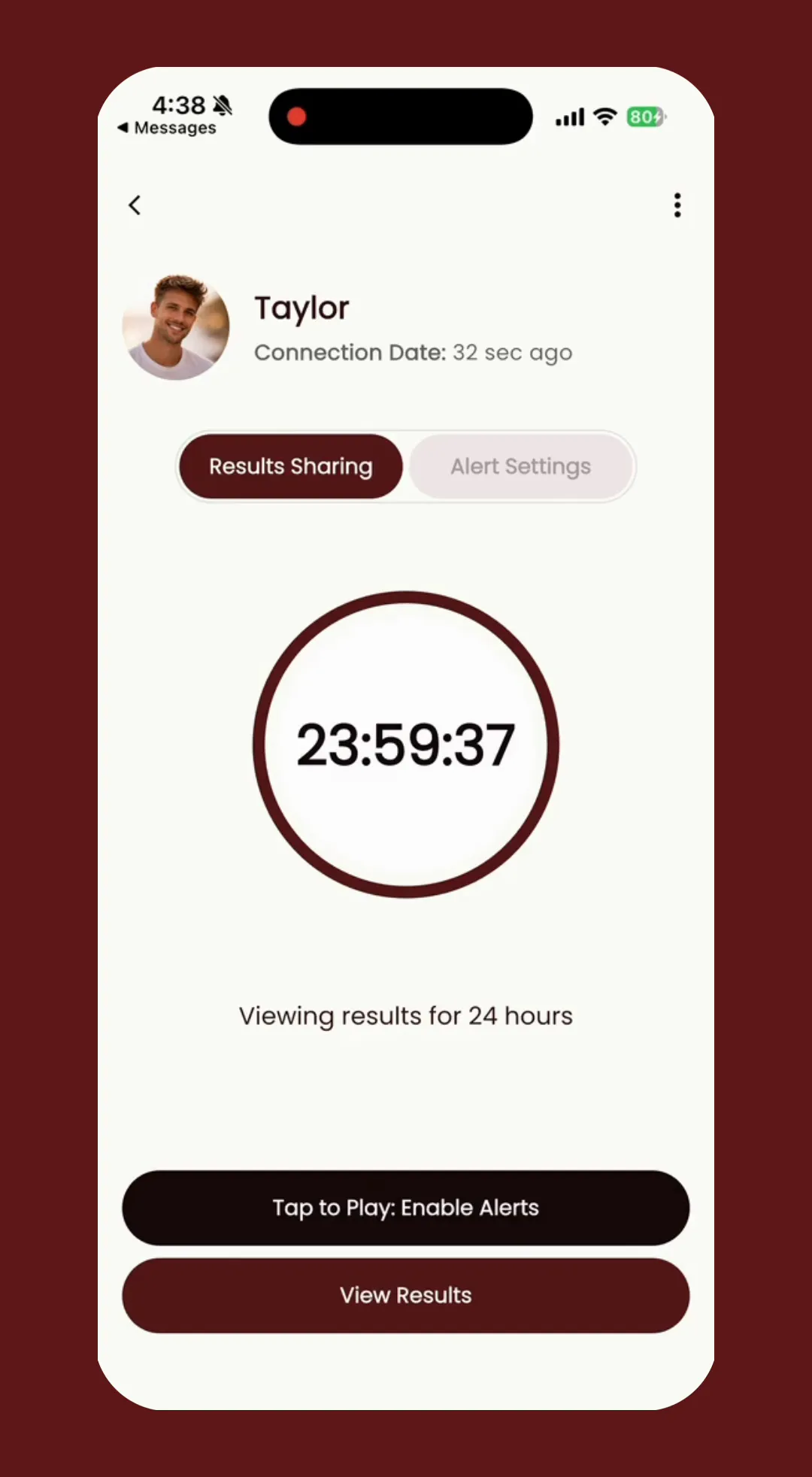
You can consider the available information in the context of your own circumstances and decide whether you’re comfortable moving forward. Maybe you have everything you need. Maybe you have a few more questions. Or maybe one of you wants to speak with a healthcare professional first.
Those are all reasonable outcomes.
The point isn’t to establish a universal standard for what everyone should test for. It’s to understand the information you’re exchanging and make decisions that feel right for both of you.
Because when it comes to sexual health, trust isn’t about having the longest list of negative tests. It’s about having an honest conversation about what you know, what you don’t, and what you’re both comfortable with.