
"I’m Clean": Why the Words We Use Around STI Testing Matter
Calling yourself “clean” after an STI test might seem harmless. But the shame associated with a positive result can make honest conversations much harder.


In our previous article about what a full STI panel actually means, we talked about a familiar response when someone asks about STI testing:
“I got a full panel, and I’m clean!”
We covered why a full panel doesn’t necessarily mean what people think it does. But there’s another word in that sentence worth talking about.
Clean.
Most people who use the term aren’t trying to insult anyone. It’s an expression we’ve heard for years, and saying you’re “clean” is supposed to be reassuring.
But if someone with negative STI results is “clean,” what does that make someone who tests positive?
When a diagnosis starts to feel like a judgment
Having an STI doesn’t make someone dirty. It’s a health condition, not a reflection of their hygiene, character, or worth as a partner.
Yet sexual health carries a level of shame we don’t typically associate with other common infections.
Think about someone who has spent years describing their own negative STI results as being “clean.” Then one day, a test comes back positive.
Does this make me dirty? Will people think I’m irresponsible? Will anyone still want to be with me?
When shame gets in the way of honesty
Imagine you’ve just received a positive STI result.
You know you should talk to your partner, but you’re terrified of how they’ll react. Maybe you’re worried about being rejected. Maybe you’re afraid they’ll tell someone else. Or perhaps you simply can’t bear the thought of a person you’re attracted to suddenly seeing you differently.
According to a 2026 survey by Testing.com (opens in a new tab), 45% of respondents who had tested positive for an STI reported having sex without disclosing their status to a partner at least once. Among those who withheld that information, 49% cited embarrassment or shame, making it the most commonly reported reason.
We encourage people to get tested, understand their results, and communicate openly with partners. Yet the fear of how someone might respond can discourage the very honesty we’re trying to promote.
That doesn’t excuse withholding information that could affect another person’s health. Everyone deserves the opportunity to make informed decisions about their own body.
If we want people to be more forthcoming about their sexual health, shouldn’t we also make it easier for them to share the truth?

How can we make STI results easier to talk about?
Instead of saying you’re “clean,” you might say, “My most recent STI results were negative.”
If you’ve tested positive, you can share that information without apologizing for who you are.
And if someone tells you they’ve received a positive result, you can appreciate their honesty while still deciding what you’re comfortable with.
“Thank you for telling me. I’d like to understand a little more before we decide what comes next.”
You don’t have to accept a situation you’re uncomfortable with. But you can respect someone’s dignity without compromising your own boundaries.
Of course, sometimes the challenge isn’t finding the right words. It’s having to initiate the conversation at all.
Imagine receiving a positive result and realizing you may need to contact several people you’ve previously been intimate with. Perhaps one was a casual encounter. Another was someone things ended badly with. Each conversation could mean reopening a relationship, facing uncomfortable questions, or revealing private information to someone you may no longer trust.
We’ve explored those challenges in our article about notifying past partners after a positive STI test.
But what if some of those conversations didn’t have to happen directly?
That’s one of the reasons we created Velvet Verify.
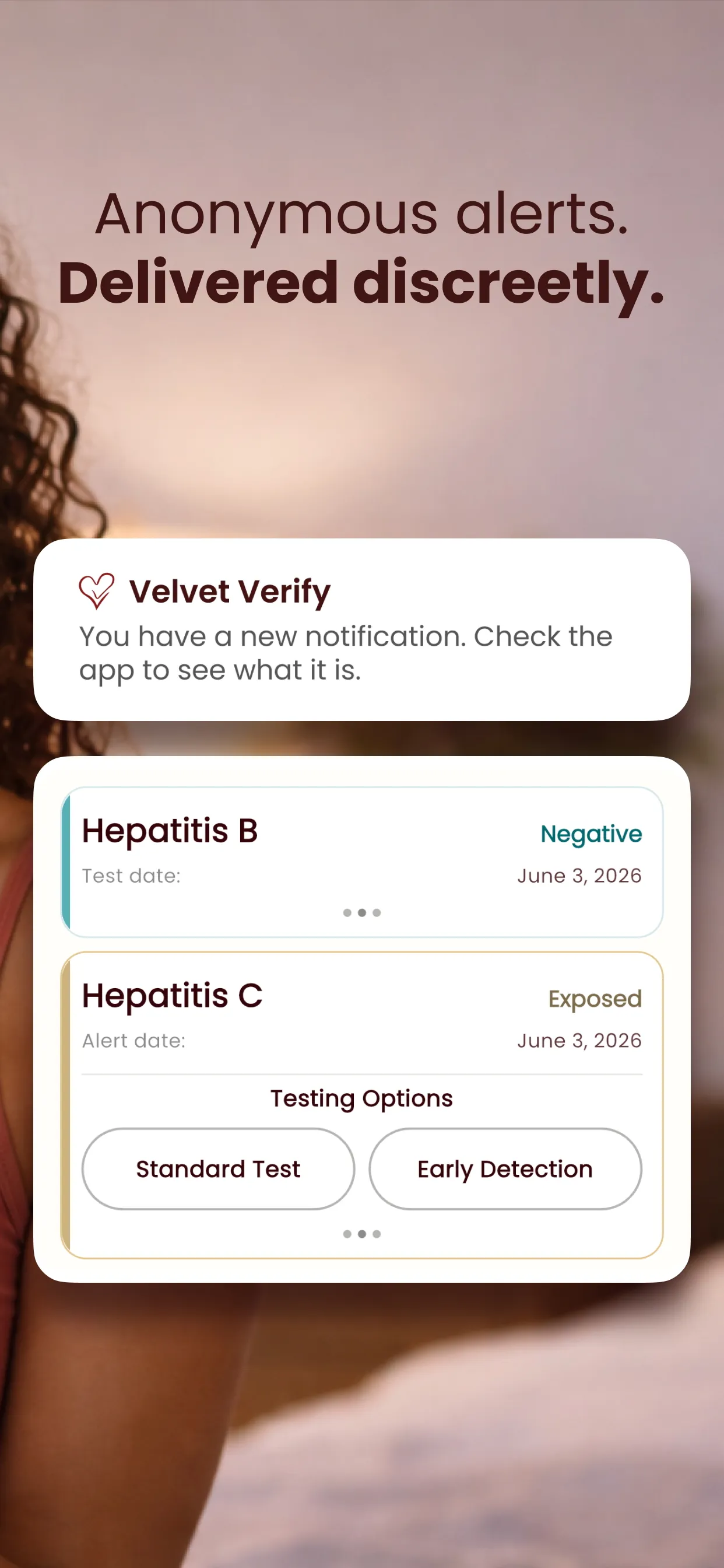
People who connect through Velvet Verify can choose to receive anonymous exposure notifications. If someone later reports a positive result, the app can automatically alert eligible, opted-in connections without identifying the person who reported it in the notification.
Someone dealing with a difficult diagnosis can focus on their own health without having to personally contact every eligible connection. And the people receiving an alert have an opportunity to seek medical guidance and make their own decisions.
Not every past partner will be connected through Velvet Verify, and direct communication or conventional partner notification may still be necessary.
But for people who have established that trusted connection, privacy can make sharing important information considerably easier.
Privacy isn’t just about keeping information secret. Sometimes, it’s what helps people share information they might otherwise struggle to disclose.
A little less judgment. A little more openness.
Changing a few words won’t eliminate STI stigma. Neither will an app.
The next time someone tells you they’re “clean,” you don’t necessarily need to correct them. You can simply ask about their results and share your own.
And the next time someone tells you they’ve tested positive, remember that they may have been afraid to have that conversation.
Because the easier we make it for people to share sensitive sexual-health information, the more opportunities we create for honesty, trust, and informed decisions.